
What Modeling Agencies are REALLY Looking for in a Portfolio ..
- Perla Diaz

- Dec 26, 2025
- 3 min read
So recently, I worked very closely with a major agency. And yes, I’ve worked with agents and agencies before. But this experience stood out in a different way.
It started with an in-person meeting, photographer to agency. Modeling agencies are constantly looking for testing photographers they trust to send their talent to, so the initial conversation was about my work, my process, and how I approach development. After vibing in person, it led to a test shoot, not just to see the images, but to understand how I work.
What made this experience different was how involved, intentional, and precise they were. We landed on a clear direction because there were specific gaps missing from the model’s book. The agency heavily creative-directed the shoot, collaborated closely throughout the process, and even selected the final images themselves.
That level of specificity gave me real, behind-the-scenes insight. Not guesses. Not assumptions. Actual clarity around what they’re looking for, how they assess range, how they choose selects, and what truly moves a book forward.
So I want to break down what was actually said—and more importantly, what it means for your portfolio.


The standard for portfolios is simple, but not easy
Their baseline expectation was clear: a three-look test, each with a distinct backdrop. They wanted each look to be cohesive, but to feel like it lives in its own world.
They were very specific about:
Multiple angles of the face
Real range in expression
Clean, intentional styling
Accessories that feel elevated, not loud
Doubled down on layering as styling
Nothing overly trendy. Nothing gimmicky. High-end or super simple always wins.


When you have a look, but no book..
The model we were discussing had a strong look. Very editorial. Very cool. Almost too cool, and that was the issue.
His book leaned gritty and heavy, while the mood board they sent was youth-driven—bright colors, polos, layered but still grounded. There was a disconnect. Not because he couldn’t do it, but because his portfolio didn’t show it.
You can have a great look and still have a book that doesn’t support where your agency is trying to place you. Editorial-heavy doesn’t always translate to commercial, youth, or lifestyle markets where clarity and adaptability matter more than edge alone.


Range is a diversification in energy, not just looks
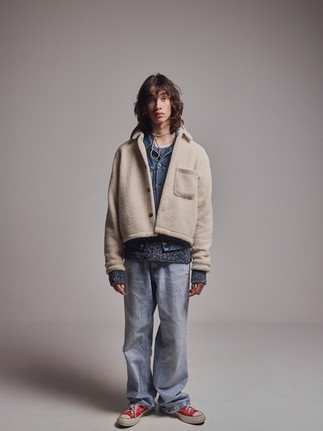
One thing they pointed out immediately was repetition of the same face, same expressions, same angles. So during the shoot, I pushed both of ourselves to create different expressions, movements, and shifts and presence ... EVEN with the same outfit on.
What stood out later, is how the selects reflected that. Each select was wildly different from the last. There were no two images that felt the same.
Collaborating with a stylist made a noticeable difference. It’s not always feasible, I know know that, when it is, the value is real!
That’s what range actually looks like. We're not looking for costume changes, but actual changes in emotional and physical variation.


What This Means for You as a Model
Here’s the part I really want you to hear:
What modeling agencies are looking for in a portfolio is not proving you look good as much as it is about proving you are USABLE.
Agencies are asking:
Can we see your face clearly, from multiple angles?
Can you shift energy without losing yourself?
Can we place you into different worlds without forcing it?
Does your book align with where we’re actually sending you?
And maybe most importantly: Do you understand the market your agency serves? Depending where you're represented, your book needs to reflect your agency direction. New York and Europe are not LA. And your book needs to reflect that.


Final thoughts about what modeling agencies are looking for in a portfolio
With the introduction of social media to the industry, there are more photographers than ever. However, agencies are still struggling to find photographers AND models who understand model development, not just aesthetics.
One of my biggest tips is to learn how to STUDY imagery and ask yourself, what is it about a certain photo that makes it WORK.
If you have the look but your book isn’t landing, it's probably because your book isn't telling the right story yet. THAT can be fixed!


Comments